
Warm commercial spaces with woodgrain finishes
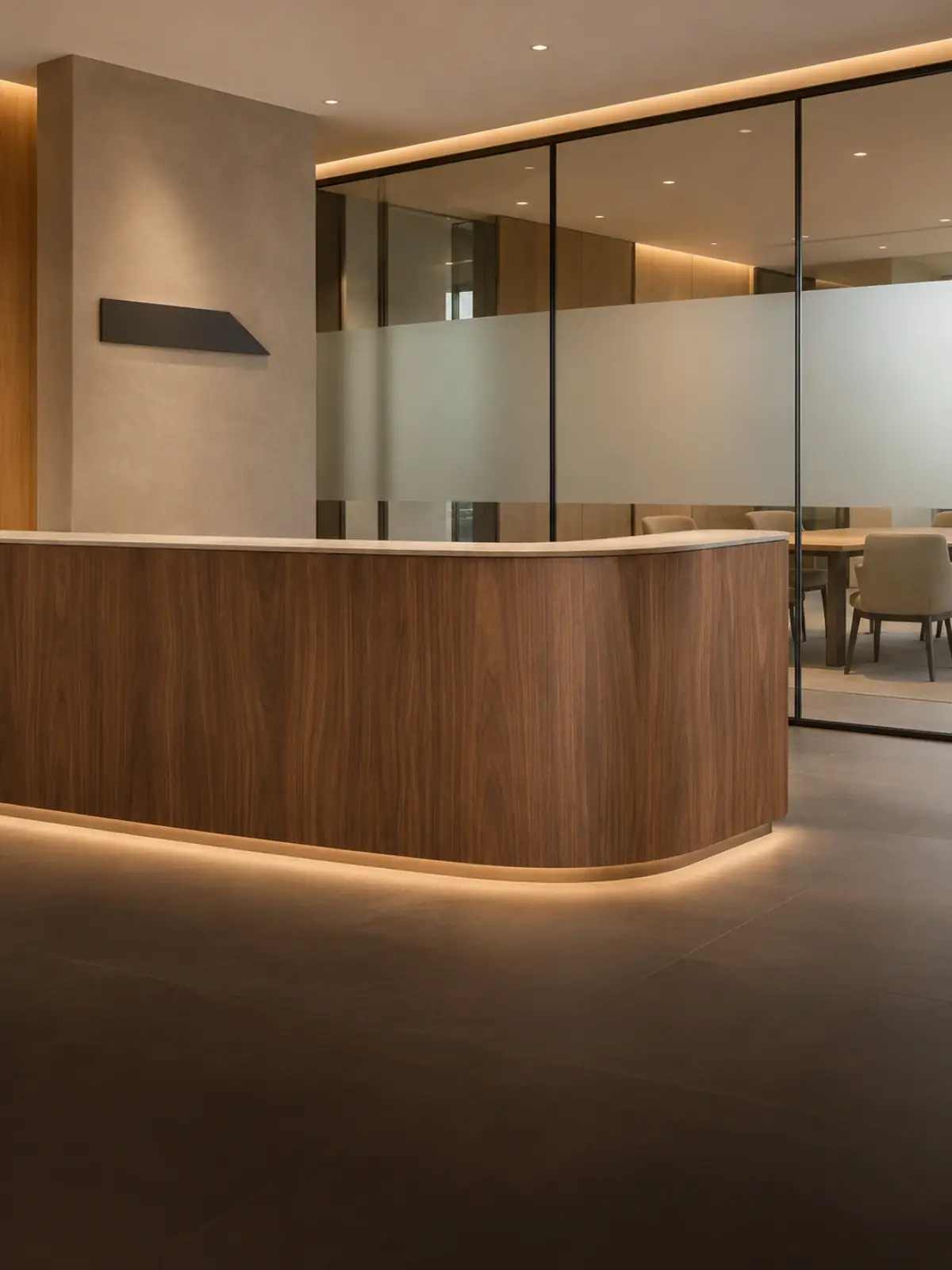
Woodgrain finishes can bring warmth to a commercial interior when they work with the lighting, neighbouring materials and installation details. Explore colour, texture and curved surfaces as part of a consistent material palette for the space.
Start with the application
Consider daylight, tactile qualities and neighbouring materials. Discuss curves, corners, substrate preparation and maintenance with the installation team before confirming a finish.
What to check
Review your substrate, lighting, graphic dimensions and expected service life. Use a physical sample in the intended setting to compare colour, texture and visual effects before confirming a material.
Plan the next step
Prepare artwork or reference images, site photographs, quantities and the project schedule. Discuss installation and maintenance requirements with the team. Specific performance and warranty conditions should be checked against the relevant product documents.
Build a coherent material palette
Choose woodgrain finishes as part of the complete space. Establish the relationship between walls, floors, glass and metal before selecting wood tones that complement or contrast with the surrounding materials.
Natural and artificial lighting can change the apparent warmth of a finish. Compare samples in the intended setting during the day and in the evening, including adjoining circulation and reception areas.
Plan grain direction and joins
Grain direction across walls, corners and cabinetry shapes the visual rhythm of an interior. Mark the intended direction and seam positions on elevation drawings before production.
For curves, recesses and complex edges, confirm the suitability of the material and installation method. A local mock-up can help review corners, edge details and visual continuity before the wider installation.
Review a representative mock-up
Choose a sample location that includes typical lighting, a corner or a join. Inspect it both from a normal viewing distance and at close range, then record the approved material reference and installation details.
Follow the relevant product instructions for routine maintenance. In frequently touched areas, discuss cleaning, edge protection and possible replacement needs alongside the initial design.